Blog

Which Ur is Abraham’s Ur?

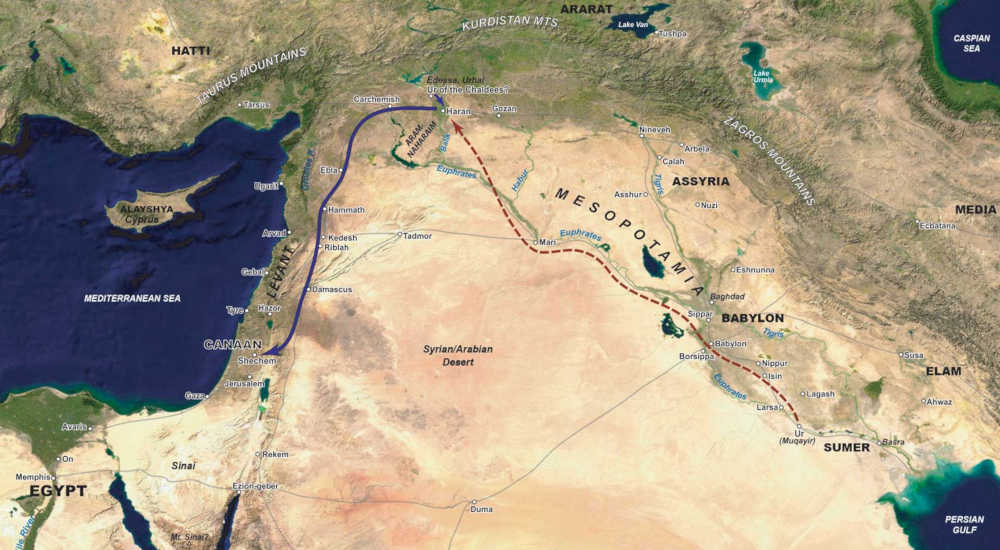
Everyone knows where Abraham’s hometown of Ur is, right? We’ve all been taught that it is in southern Iraq. It is common for Bible teachers to present a biblical explanation or interpretation as if it were an undisputed fact. Often this is because they do not know there are any other explanations. One reason this blog exists is to inform Christians about information and plausible alternative interpretations debated among scholars which somehow never filters down to the person in the pew.

Sometimes these sequestered ideas are very consequential to our faith, and others are mere curiosities. One such example of a disputed “fact” that falls in the curiosity category is the location of “Ur of the Chaldees.” 

Have we erred about Ur?

Until the 1920’s there was general consensus among Christians, Jews, and Muslims that Abraham’s Ur was in northern Mesopotamia in what is today southern Turkey. In the 1850s, British archaeologists identified Tell el-Muqayyar as the ancient Sumerian city-state of Ur. Tell el-Muqayyar is in southern Iraq about 150 miles northwest of the Persian Gulf. A tell (aka tel or tall) is a word meaning “mound.” Ancient cities were usually elevated above their surroundings.

Continue reading →
Posted by Eddie Lawrence in Genesis

Father Abraham Had Many Sons

Abraham

After describing the incident at the city of Babel, which revealed the origins of the world’s nations and cultures, Genesis resumes the genealogy of Shem and introduces us to Abraham. This short list of Shem’s descendants links the world of primeval history recorded in the first eleven chapters of Genesis to a man named Abram. Later on, God will rename him Abraham (Gen 17:5).

By some reckonings, Abraham was born as early as 2150 BC and died in 1975 BC. This is too early to fit the biblical narrative. Using information from the Bible, we can calculate that Abraham was born in 1951 BC and died in 1776 BC. 

When did Abraham live?

Abraham is probably the first person in the Bible whom we can date with confidence. Galatians 3:16-17 says that 430 years passed between the promise God made to Abraham and the giving of the law. God gave the law on Mount Sinai just a few months after the exodus from Egypt, but when was the exodus? 

Continue reading →
Posted by Eddie Lawrence in Genesis

Were The Rich Man And Lazarus Real People?, Part 2

Rich man and Lazarus

In the last blog post we considered evidence which suggests the rich man and Lazarus were not real people. Instead, it appears that Jesus adapted a well known Jewish story to teach a lesson. So, what was the lesson Jesus was teaching in this story?

As always, context should be the primary factor in determining the meaning of a passage. The structure and content of Luke’s writings offers valuable insight to aid us in determining what Jesus’s true point was.

Continue reading →
Posted by Eddie Lawrence in Afterlife

Were The Rich Man And Lazarus Real People?, Part 1

rich man and Lazarus

The story of the rich man and Lazarus (Luke 16:19-31) is one of the best-known narratives in the New Testament. Many Christians read it as a window into the afterlife, but was that Jesus’s intention? A careful look at the context and cultural background of this passage suggests His purpose was something quite different. The point of the story of the rich man and Lazarus was to overturn a misconception. It illustrates that possessing wealth and honor are not indications that one is in good standing with God.

The popular belief that this passage offers insight into life after death is very prevalent. Therefore, we must examine the idea to test its validity. If Jesus was speaking of a real, historical event involving Lazarus and the rich man, then one could argue with greater confidence that Jesus’s point was to impart knowledge about the realm of the dead. On the other hand, if these characters were not real then Jesus’s intended message must have been something else.

Continue reading →
Posted by Eddie Lawrence in Afterlife

A Tower With Its Top In The Heavens, Part 2

Tower

Genesis 10 lists the clans and nations that we’ll encounter later in the Bible. It shows us Noah’s family tree, but it doesn’t explain how or why his descendants spread across the ancient world. The last verse summarizes what the chapter was about.

“These are the clans of the sons of Noah, according to their genealogies, in their nations, (Gen. 10:32a ESV)

It also transitions us to chapter 11 and sets the expectation that we’ll be told how and why the nations dispersed after the flood.

and from these the nations spread abroad on the earth after the flood.” (Gen. 10:32b ESV)

In the last blog post we examined why the Bible does not support some popular ideas about the tower of Babel story. In this post, we’ll focus on what the text really does say.

What really happened at the Tower of Babel?

Continue reading →
Posted by Eddie Lawrence in Genesis