
Nobody names their own movement after an insult. But that’s exactly what happened with the Methodists. Their critics mocked them for taking their faith too seriously, and the name those critics coined ended up outlasting everyone who meant it as a dig. It starts with two brothers at Oxford, a Bible study, and a denomination that eventually rode on horseback across the American frontier.
The Holy Club
The story begins in Oxford, England, in 1729. Brothers John and Charles Wesley, along with a few other students at Christ Church, formed a small group to study Scripture and pursue a devout Christian life. The two brothers grew up as sons of Samuel, an Anglican priest, and his wife Susanna. Susanna instilled deep habits of spiritual discipline in her children, and John and Charles carried that instinct with them to university.
The Church of England was their church. Neither Wesley brother had any desire to leave it. But they felt it had grown cold, rigid, and formal, so they set out to do something about it within their own circles. The group they formed, which came to be called the “Holy Club,” made serious commitments: to lead holy lives, to take communion weekly, to maintain private devotions, to visit prisoners, and to spend time together each week in Bible study. Their methodical habits of study and devotion led other students to derisively call them “Methodists.”1
Charles Wesley originally organized the group, but turned leadership over to John. That made sense. John was the ordained Anglican priest among them, and he had the organizational instincts to match his spiritual zeal.
More Than a Discussion Group
Under John’s leadership, the group expanded its ministry beyond Bible study. From 1730 on, they added social services to their activities, visiting Oxford prisoners, teaching them to read, paying their debts, and trying to find employment for them. They also distributed food, clothes, medicine, and books to the poor. These weren’t just a group of young men who liked to discuss theology. They put their faith into motion, week after week, in ways that cost them time and money. The name “Methodist” was meant as a taunt, but what it actually described was a group of people who took their Christianity seriously enough to be systematic about it. Then came 1738, and everything changed.
The Moment Everything Changed
On May 24, 1738, in Aldersgate Street, London, John sat in a meeting largely composed of Moravian Christians and heard someone read Luther’s preface to the commentary on Romans. His intellectual conviction transformed into personal experience on the spot. He described his heart as “strangely warmed.”2 The Wesley brothers moved from methodical religion to evangelical fire, and they took that fire to the streets.
Filled with zeal after their profound spiritual experiences in 1738, the Wesley brothers began preaching across England. They discovered that people grew in their faith when organized, just as the brothers had grown through the Holy Club. Wesley gathered converts into small societies and class meetings, structuring them carefully for discipleship and accountability. The movement spread rapidly, but it remained, in Wesley’s mind, a renewal movement within the Church of England rather than a separate denomination.3
Taking the Gospel to the American Frontier
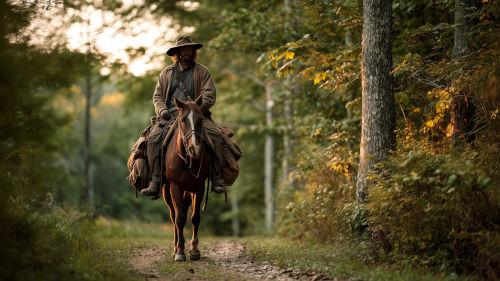
The American chapter of the story began in the 1760s and 1770s. The earliest American Methodist societies took root in the New York City, Philadelphia, and Maryland areas. Lay preachers and missionaries fanned out from there, eventually targeting the frontier regions where formal church structures simply didn’t exist. Circuit riders, traveled by horseback to preach the gospel and establish churches, bringing a Methodist presence to nearly every rural crossroads and frontier settlement.
These circuit riders were a remarkable group. Carrying only what could fit in their saddlebags, they rode through wilderness, preaching every day at any available place: people’s cabins, courthouses, fields, meetinghouses, and street corners. They held camp meetings that drew crowds from miles around, and they turned the rough American frontier into fertile ground for revival.
The Christmas Conference of 1784
When the Revolutionary War broke out, Church of England priests serving in America returned to England, leaving no one to administer the sacraments to the Methodists. Lay preachers kept the societies going, but the congregations wanted ordained clergy. Wesley resolved to act. In 1784 he ordained two men as elders and appointed Thomas Coke as superintendent to go to America and organize a separate church.4
American preachers gathered at Lovely Lane Chapel in Baltimore beginning December 24, 1784, in what became known as the Christmas Conference. Over ten days of church business, they formally organized the Methodist Episcopal Church.5 Francis Asbury, who had served as the de facto leader of American Methodism for years, refused to accept the role of superintendent solely by Wesley’s appointment and insisted the preachers elect him to serve in that capacity.6
From a Mocked Bible Study to a Movement
By 1844, the Methodist Episcopal Church had grown into the largest Protestant denomination in the country. In 1939 three different branches of the Methodist movement merged and dropped “Episcopal” from their name.7 What started as a small Bible study group at Oxford, mocked for its rigid piety, had become one of the most powerful religious forces in the history of the United States. Sometimes the names people use to mock you end up defining your legacy.
References
- González, Justo L. The Story of Christianity: Volume 2: The Reformation to the Present Day (p. 266). HarperCollins. Kindle Edition.
- González, Justo L. The Story of Christianity: Volume 2: The Reformation to the Present Day (p. 266). HarperCollins. Kindle Edition.
- González, Justo L. The Story of Christianity: Volume 2: The Reformation to the Present Day (pp. 270-271). HarperCollins. Kindle Edition.
- González, Justo L. The Story of Christianity: Volume 2: The Reformation to the Present Day (p. 272). HarperCollins. Kindle Edition.
- https://en.wikipedia.org/wiki/Christmas_Conference.
- https://www.religioninamerica.org/rahp_objects/the-methodist-church-in-america-asserts-its-independence-the-christmas-conference-of-1784/.
- https://www.umc.org/en/content/glossary-methodist-episcopal-church-the.